 info@flexby.eu


Microalgae offer a promising way to make wastewater treatment more sustainable by helping clean water while producing renewable biomass that could serve as a feedstock for future low-carbon fuels.
Giving wastewater a second purpose
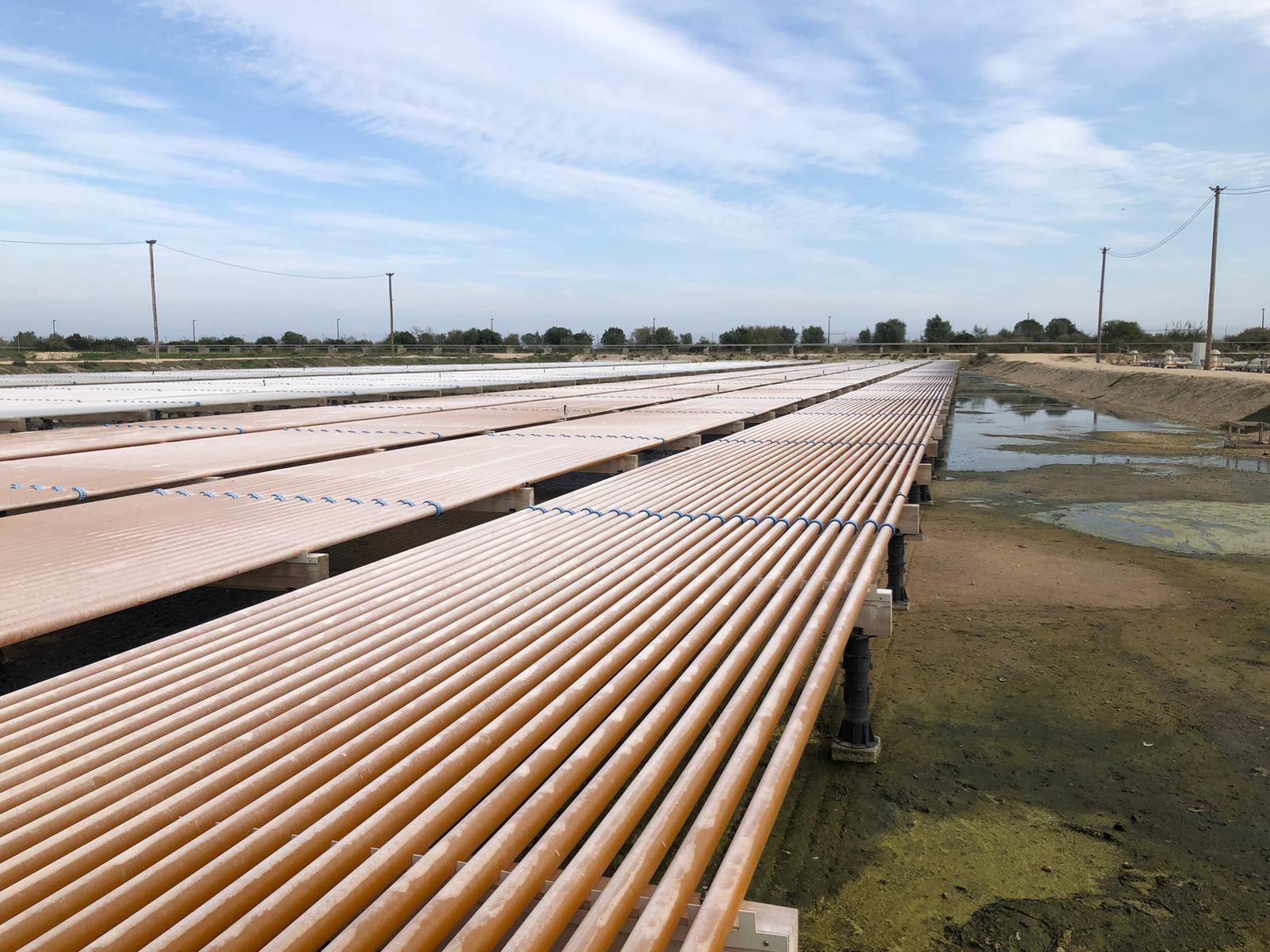
As part of the FLEXBY project, researchers have tested a pilot-scale system that uses partially treated urban wastewater to cultivate microalgae. The approach gives wastewater an additional treatment stage while transforming its remaining nutrients into valuable biological material.
Operating outdoors in the Lisbon region from spring 2025 to 2026, the pilot treated approximately 110,000 litres of secondary-treated wastewater and produced microalgal biomass for further research into renewable fuel production.
How microalgae help clean water
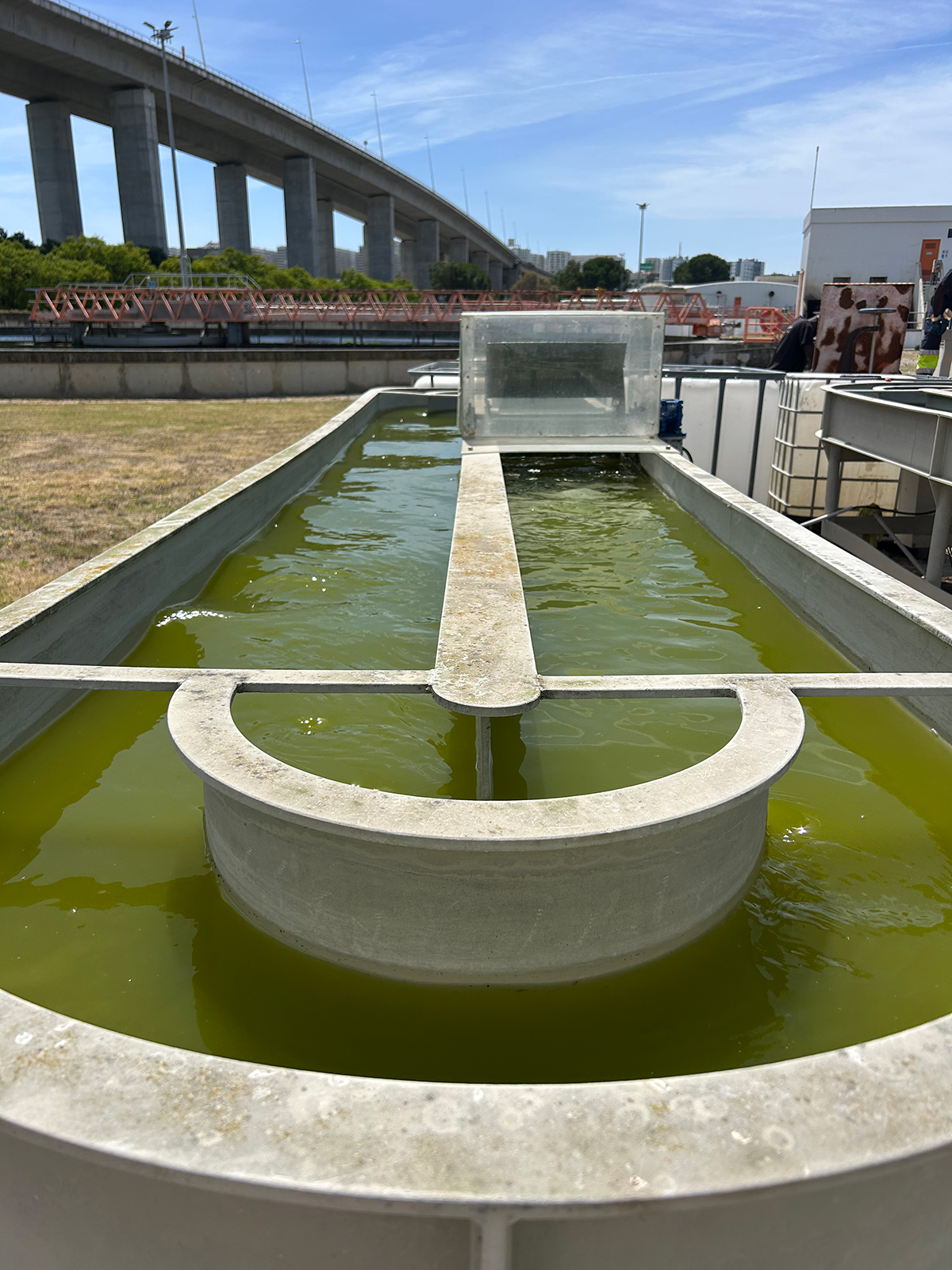
Microalgae are microscopic organisms that use sunlight to grow and naturally absorb nutrients from their surroundings. In the FLEXBY pilot, they helped remove nitrogen and phosphorus from the wastewater, improving its quality while generating biomass that could potentially be used in biofuel production.
The system performed well overall, with nutrient levels in the treated water meeting the stricter limits of the revised Urban Wastewater Treatment Directive discharge requirements during most of the operating period. Ammonium, a form of nitrogen commonly found in wastewater, was completely removed whenever it was present in the incoming water.
Performance was particularly strong during warmer, sunnier months, when conditions supported faster microalgae growth and more efficient nutrient removal.
Adapting to changing environmental conditions
Because the cultivation system relies on natural sunlight and outdoor conditions, its performance varied throughout the year. Biomass production was highest in spring and summer, while lower temperatures and reduced daylight led to slower growth during winter.
The researchers also observed natural changes in the microalgae community over the course of the trial. Although one group remained dominant for most of the period, a temporary shift in the community affected how easily the biomass could be collected. In response, the team adapted its harvesting methods, highlighting the importance of monitoring and operational flexibility when working with biological systems.
These findings provide valuable insights into how seasonal conditions and changes in water composition can influence the performance of microalgae-based wastewater treatment.
From wastewater treatment to renewable fuel research
Throughout the pilot, the team carried out 27 biomass-recovery campaigns, producing approximately 22.8 kg of wet microalgal paste. This material was supplied or stored for further testing within FLEXBY's wider research activities, which explore innovative ways to convert biological resources and waste-derived feedstocks into renewable fuels and other valuable products.
The project also refined the methods used to separate microalgae from treated water. The selected approach considered recovery efficiency, operational costs and the need to preserve biomass quality for subsequent processing. Further adjustments helped maintain effective recovery even when the composition of the microalgae community changed.
Supporting a more circular approach to wastewater treatment
The FLEXBY pilot demonstrates how wastewater treatment and renewable biomass production can be combined within a single process. By recovering nutrients from treated wastewater and converting them into useful biological material, the approach offers an opportunity to make better use of existing resources.
Beyond demonstrating the technology's potential, the trial generated practical knowledge about the influence of weather, water composition, microalgae populations and harvesting methods on system performance.
By connecting water treatment with renewable biomass production, FLEXBY is contributing to a more circular approach to resource management, where waste streams can become valuable inputs for future low-carbon fuels and more sustainable industrial processes.